

Prairie Springs on Park: An Urban Ecology Center Event Venue
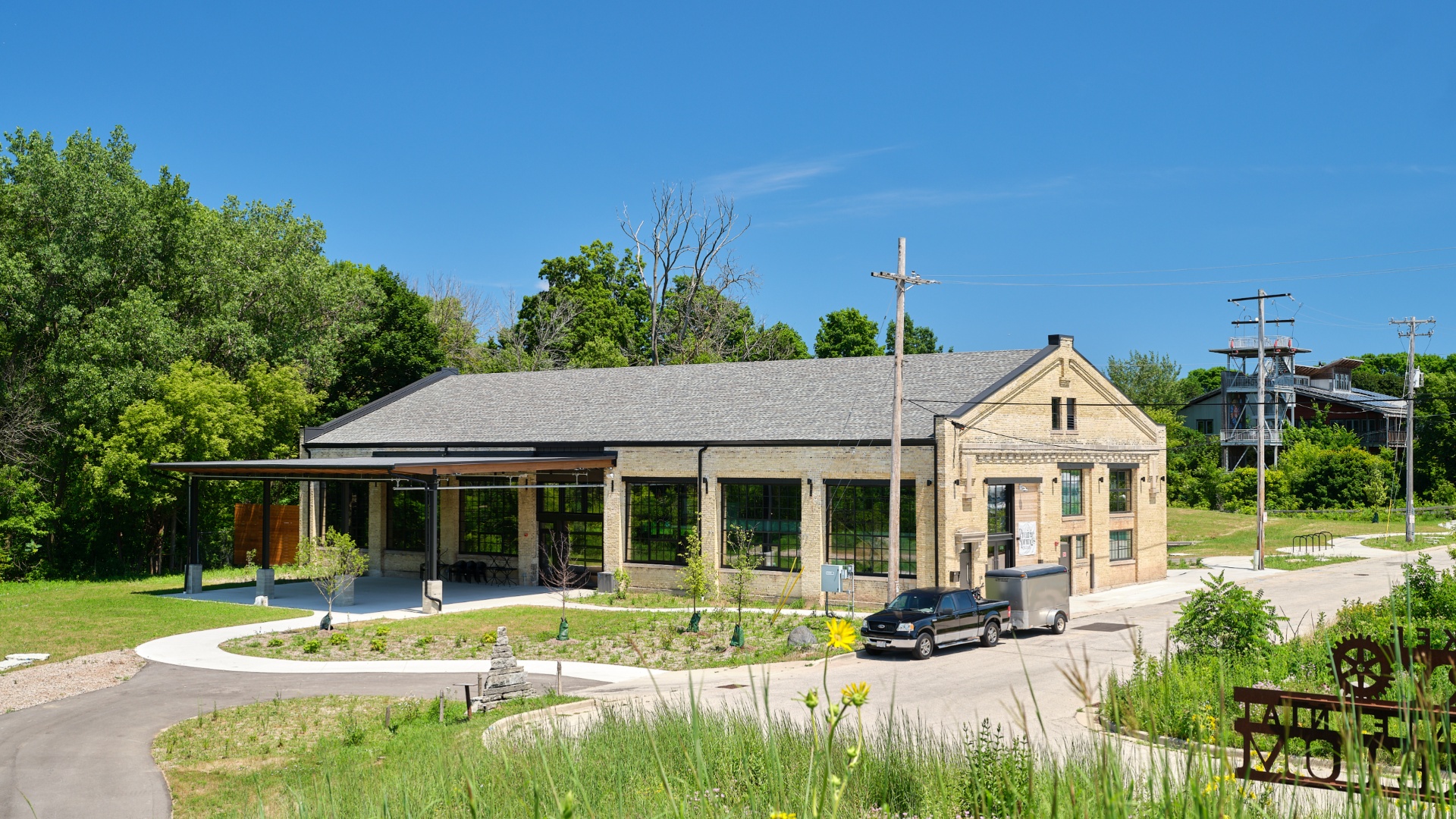
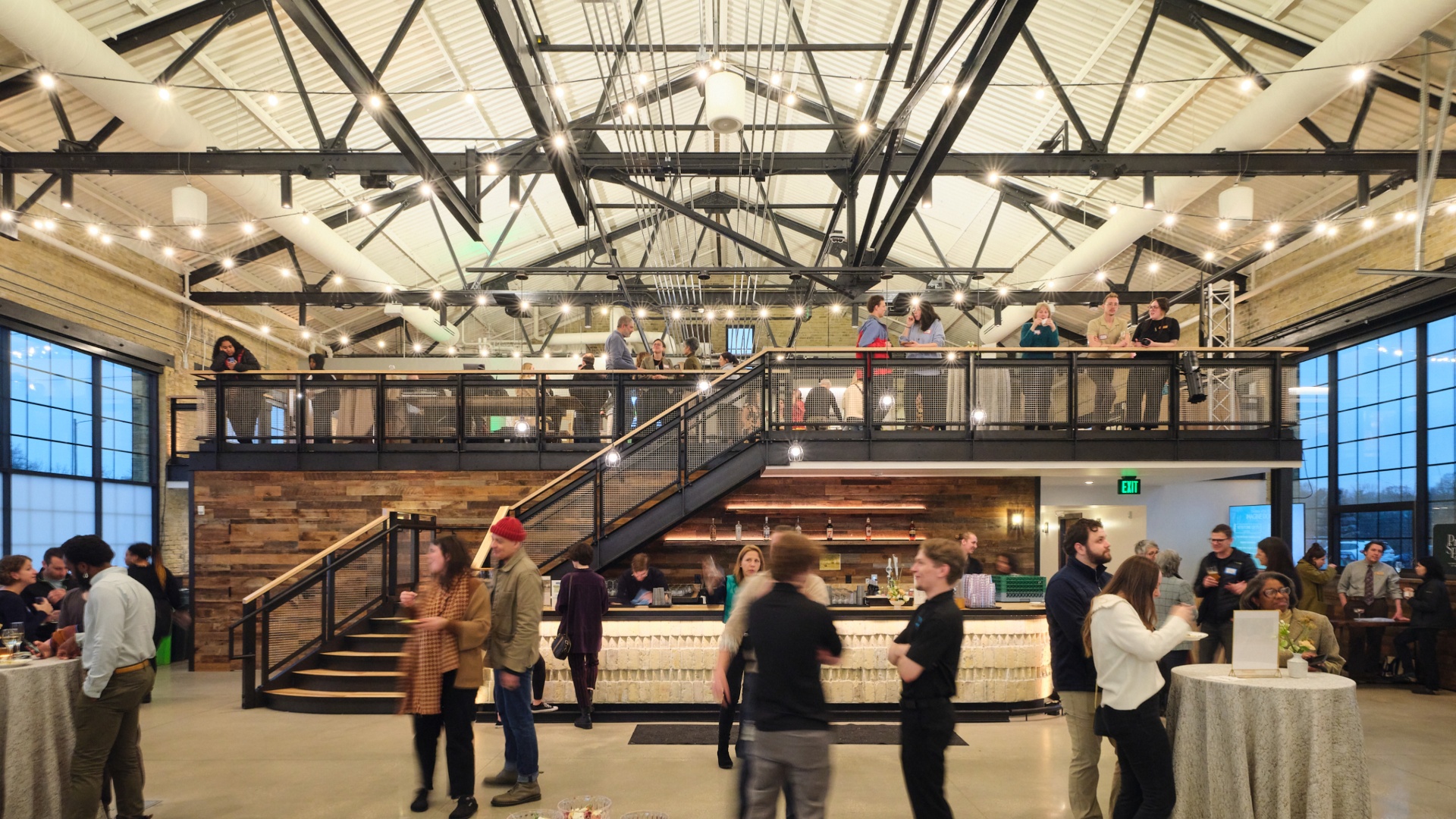
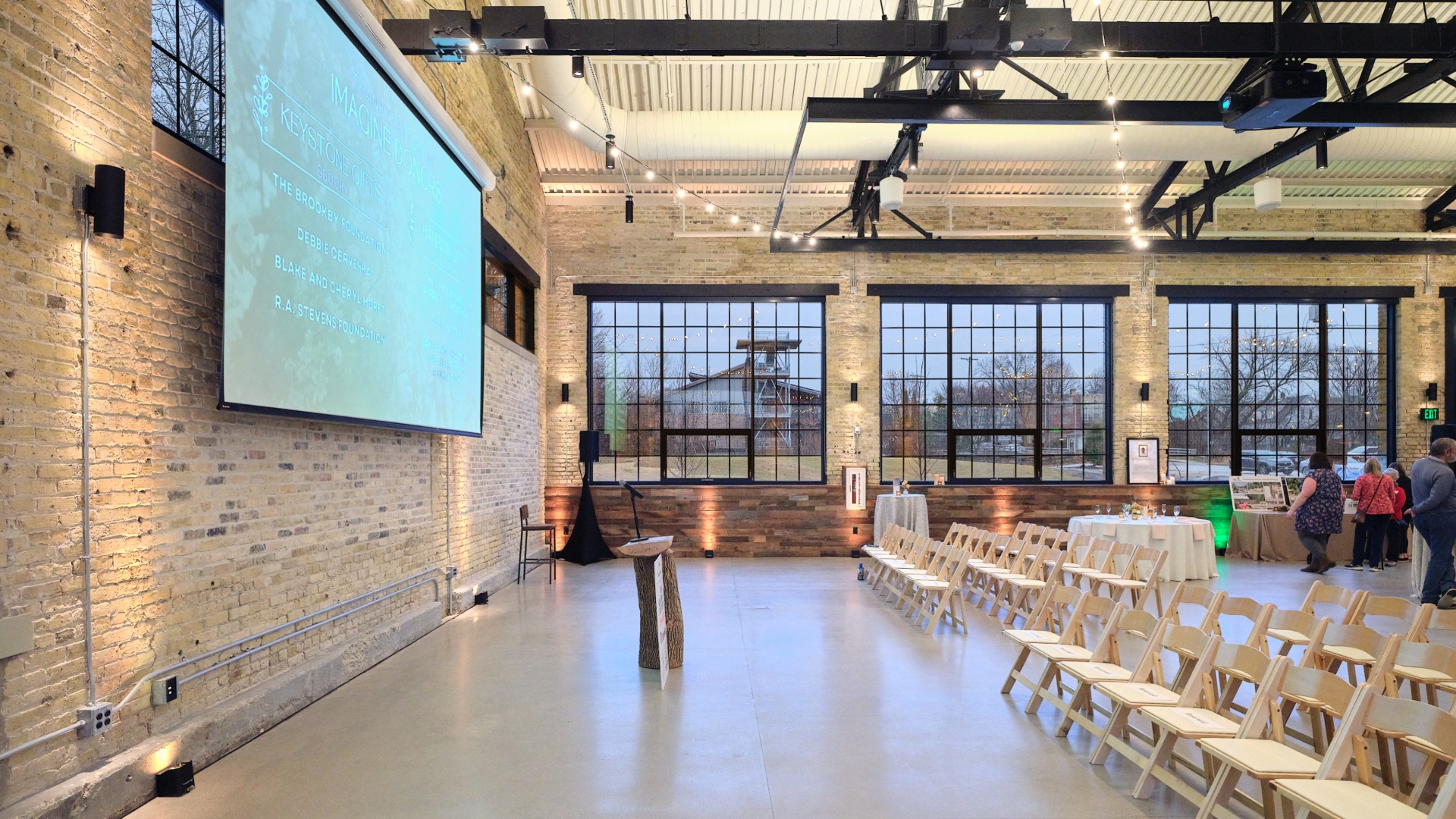
Prairie Springs on Park: An Urban Ecology Center Event Venue renovation transformed a 100-plus-year-old structure into a sustainable event hall that honors its historic character while minimizing environmental impact. Rooted in adaptive reuse and responsible resource management, the project reflects a deep commitment to conservation, community connection, and long-term environmental stewardship.
Scope of Work:
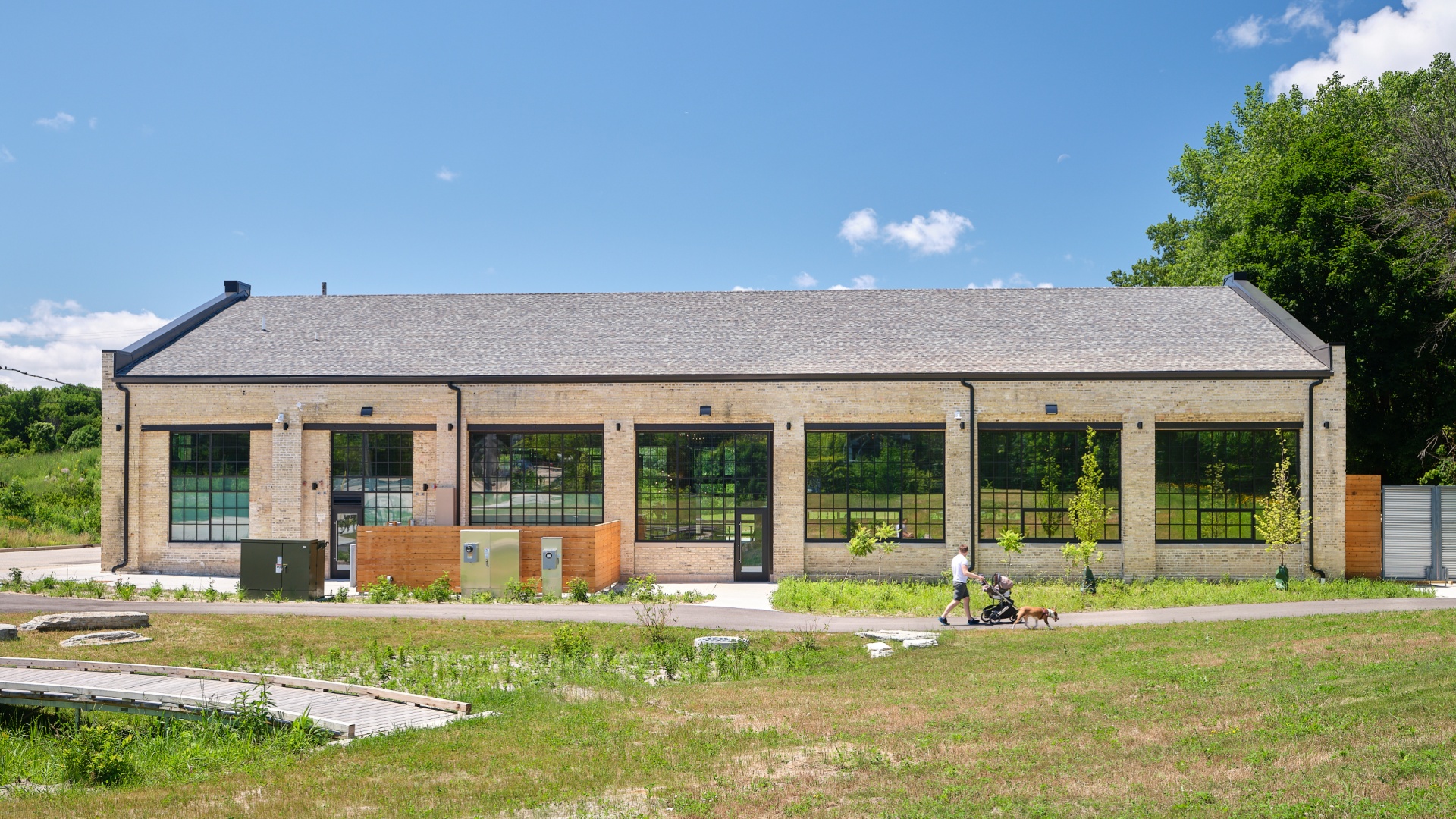
The project includes the full renovation of the existing historic building into a functional event space, along with extensive site improvements. Work involved interior demolition, structural repairs, installation of a new roof system with an acoustic deck, and the addition of bird-friendly windows. Site enhancements included new pedestrian connections, bio-retention ponds, landscaping, and integration with nearby park trails.
Sustainable Design & Material Reuse:
Sustainability was central to every phase of the project. Cream City brick—known for its fragility—required careful restoration, including tuckpointing and selective replacement. During demolition, 15 pallets of salvaged brick were preserved and reused, while demolished masonry, concrete, and excavated soils were processed and repurposed on-site to minimize waste and hauling. All wood and millwork were locally sourced, incorporating regional ash and birch, with reclaimed wood used for interior cladding. Bird-friendly glazing was installed to reduce bird collisions, supporting local wildlife and environmental health.
Challenges & Solutions:
Unexpected conditions during demolition, including the need for roof abatement and extensive masonry repair, increased project complexity. Each compromised material was carefully documented and reviewed with structural engineers to determine appropriate solutions. Through proactive coordination and adaptive planning, the team maintained progress while preserving the building’s integrity and sustainability goals.
Site Integration & Community Impact:
The project strengthens connectivity between the site and surrounding community assets, including nearby trails at Riverside Park. A new sidewalk creates a direct link for visitors, while bio-retention ponds, a boardwalk feature, and native landscaping enhance the natural environment and user experience. Existing monuments were preserved and incorporated into the design, maintaining the site’s historical significance.