







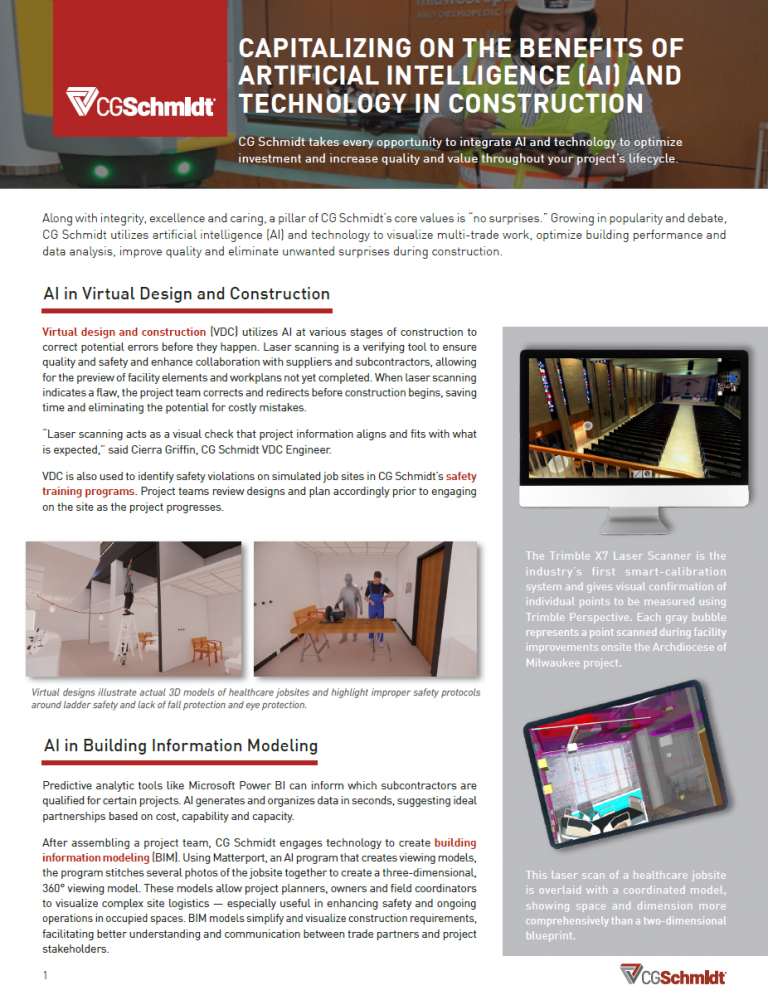
Along with integrity, excellence, and caring, a pillar of CG Schmidt’s core values is “no surprises.” Growing in popularity and debate, CG Schmidt utilizes artificial intelligence (AI) and technology to visualize multi-trade work, optimize building performance and data analysis, improve quality, and eliminate unwanted surprises during construction.
AI in Virtual Design and Construction
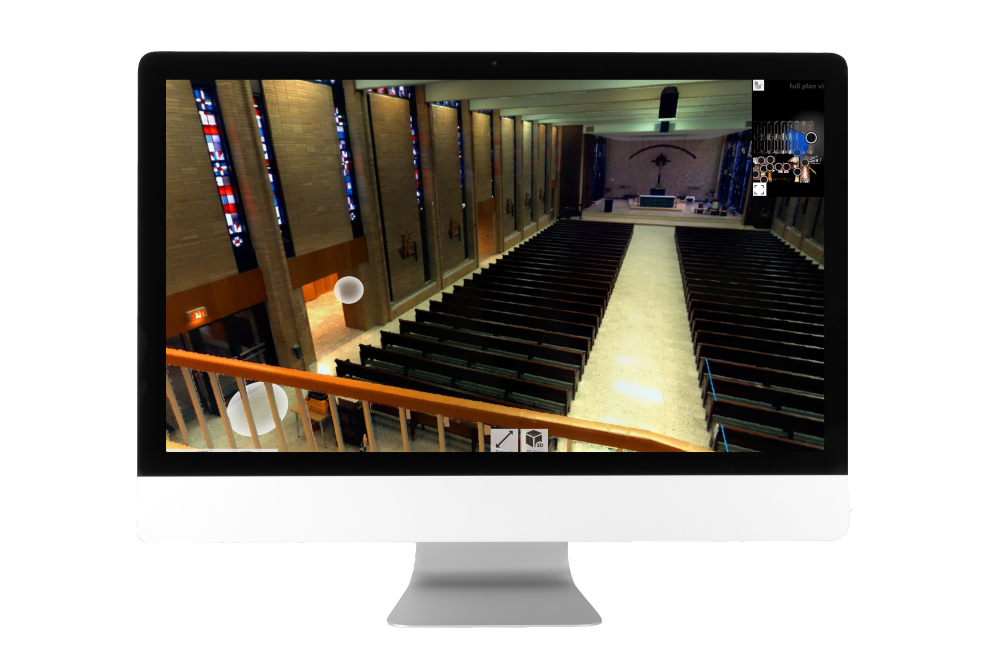
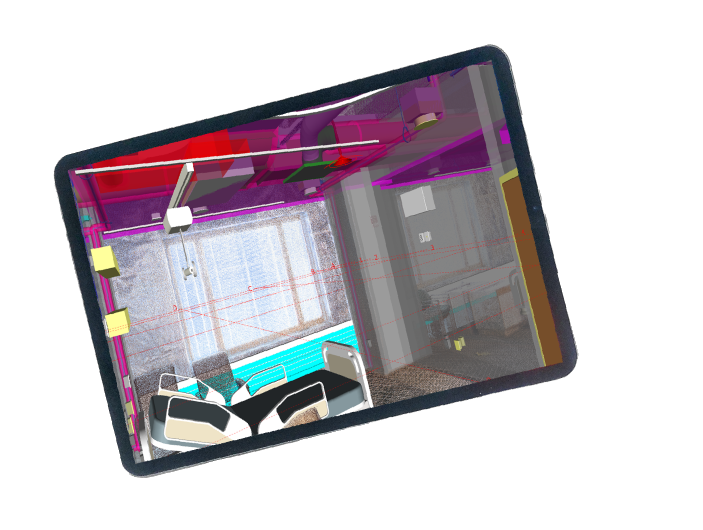
Virtual design and construction (VDC) utilizes AI at various stages of construction to correct potential errors before they happen. Laser scanning is a verifying tool to ensure quality and safety and enhance collaboration with suppliers and subcontractors, allowing for the preview of facility elements and workplans not yet completed. When laser scanning indicates a flaw , the project team corrects and redirects before construction begins, saving time and eliminating the potential for costly mistakes.
“Laser scanning acts as a visual check that project information aligns and fits with what is expected,” said Cierra Griffin, CG Schmidt VDC Specialist & Drone Fleet Manager.
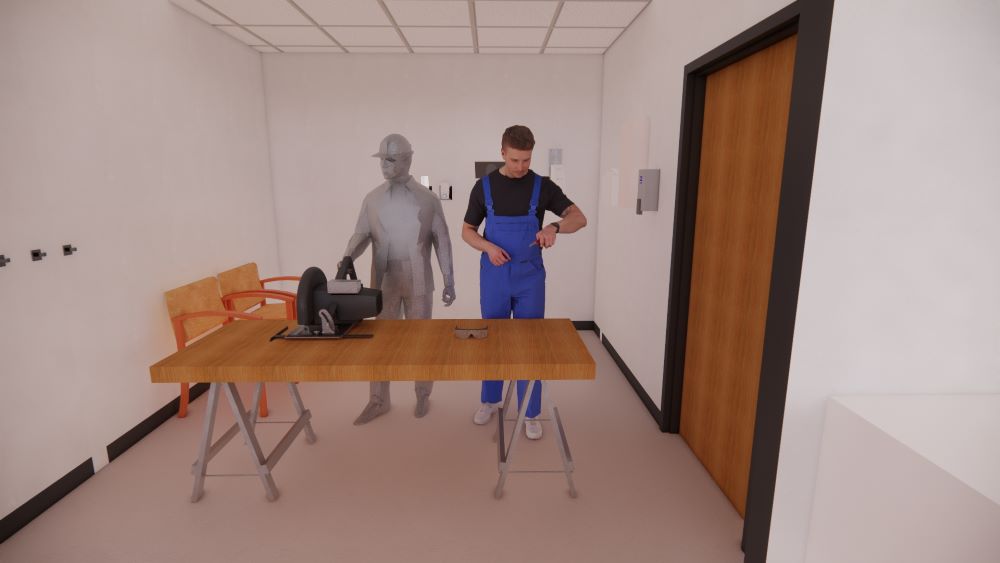
VDC is also used to identify safety violations on simulated job sites in CG Schmidt’s safety training programs. Project teams review designs and plan accordingly prior to engaging on the site as the project progresses.

AI in Building Information Modeling
Predictive analytic tools like Microsoft Power BI can inform which subcontractors are qualified for certain projects. AI generates and organizes data in seconds, suggesting ideal partnerships based on cost, capability and capacity.
After assembling a project team, CG Schmidt engages technology to create building information modeling (BIM). Using Matterport, an AI program that creates viewing models, the program stitches several photos of the jobsite together to create a three-dimensional, 360° viewing model. These models allow project planners, owners and field coordinators to visualize complex site logistics — especially useful in enhancing safety and ongoing operations in occupied spaces. BIM models simplify and visualize construction requirements, facilitating better understanding and communication between trade partners and project stakeholders.
Matterport
Leveraging AI and advanced technology is no longer optional—it’s a competitive advantage. CG Schmidt utilizes Matterport, a leading 3D spatial data company that specializes in digitizing physical spaces into immersive, interactive digital twins through a blend of specialized cameras and cloud-based artificial intelligence.
These highly detailed 3D models and virtual tours give project teams and stakeholders the ability to explore job sites remotely, providing clear insight into existing conditions and project progress without disrupting on-site work. By integrating this technology into our workflows, we enhance coordination, improve documentation accuracy, reduce rework, and support faster, more informed decision-making throughout the project lifecycle—driving efficiency, reducing risk, and achieving stronger outcomes.
AI Uses in Matterport
Matterport’s AI-driven technology brings a new level of efficiency and insight to the way physical spaces are captured and analyzed. Using its Cortex AI engine, Matterport automatically converts captured 2D images and spatial data into immersive, interactive 3D digital twins. That same intelligence powers the Property Intelligence platform, which evaluates these models to extract meaningful data such as room dimensions, object identification, and overall property layouts.
By delivering automated measurements, detailed reports, and actionable insights, Matterport reduces the time and cost associated with managing physical spaces—giving construction teams more accurate information to support planning, coordination, and decision-making throughout the project lifecycle.
Laser Scanning
Laser scanning with the Trimble X7 plays a critical role in CG Schmidt’s approach to precision-driven construction. This high-speed 3D laser scanning technology captures survey-grade spatial data of existing structures, landscapes, and site conditions, generating highly accurate digital representations of the built environment.
Collecting millions of data points in a short amount of time, the Trimble X7 provides reliable information that supports coordination, verification, and planning—helping our teams reduce risk, limit rework, and make confident, data-informed decisions throughout the project lifecycle.
AI Uses in Laser Scanning
The Trimble X7 further enhances laser scanning capabilities through built-in AI that automates critical tasks such as scan registration, calibration, and intelligent data collection. These AI-driven features automatically align multiple scans, confirm instrument readiness, and ensure accurate, target-free registration without the need for manual adjustments.
Streamlining on-site workflows and reducing the potential for human error, the Trimble X7 accelerates data capture while delivering consistently high-quality, reliable datasets that support efficient coordination and confident decision-making.
Drones in Construction
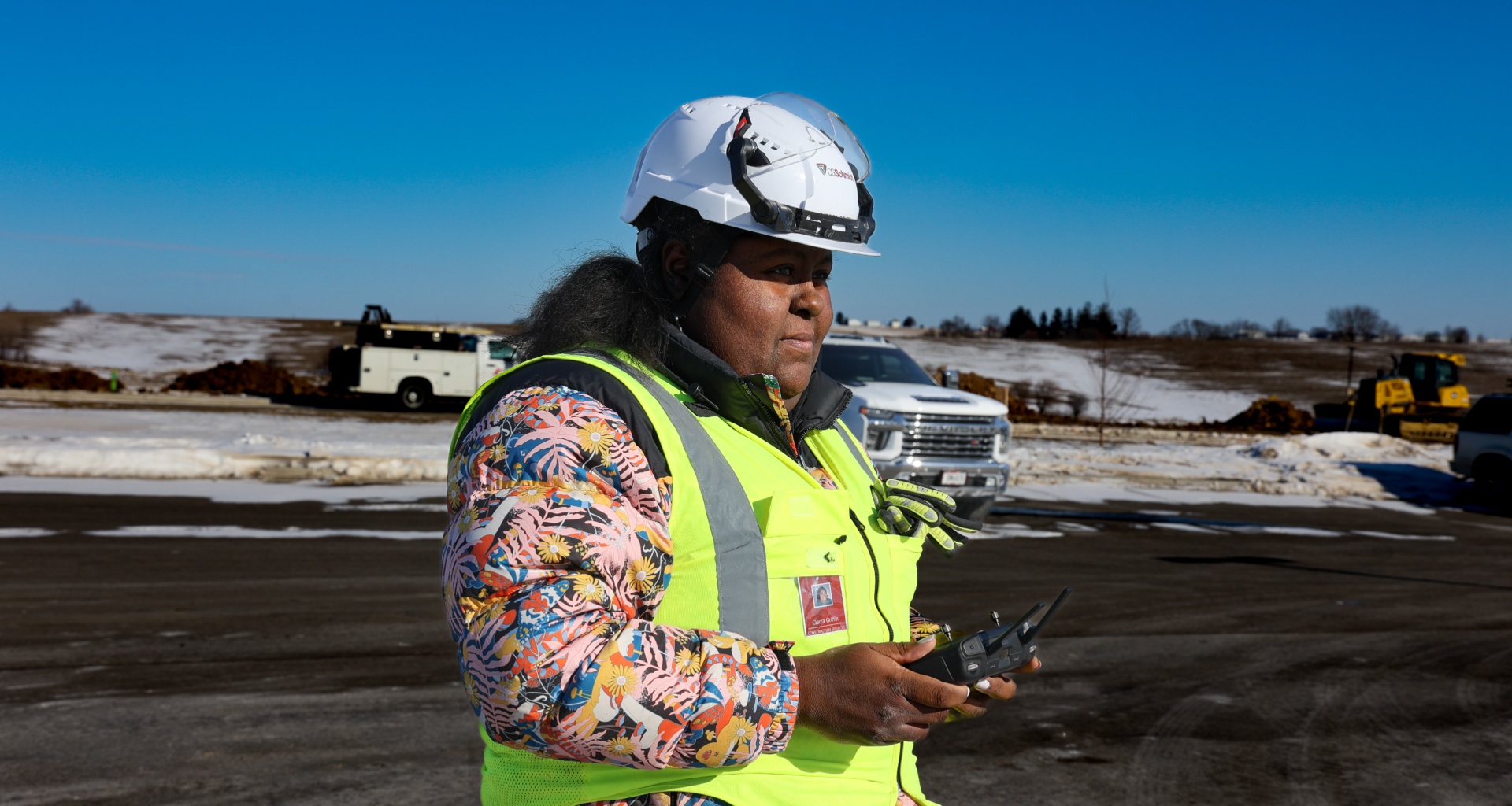
In an industry where safety is a top priority, drones excel in tasks that hold significant risk factors, such as examining jobsites and surrounding areas high above the ground. CG Schmidt uses the Skydio 2+ drone, which tracks, navigates and avoids obstacles using AI.
“I think drones are going to be the way of the future. They perform difficult and unsafe tasks very easily, such as inspections in hard-to-reach or unsafe areas,” Griffin said.
Not only is using a drone the safer option, but it also captures high-resolution imagery and videography with ease. Drone documentation and imaging hold huge value for clients who garner community interest and investment in their project, as well as for owners looking to promote, share or lease their new facility.
Project Highlight
CRISTO REY JESUIT HIGH SCHOOL MILWAUKEE
High-resolution drone footage provided an aerial view of the new Cristo Rey Jesuit High School Milwaukee and documented progress from start to finish. Drone technology is a valuable asset to schools and districts working to engage the community, gain support for capital campaigns or pass referendums. For example, a district interested in parking lot renovations may benefit from drone footage that illustrates challenges with current traffic patterns and highlights possible solutions.
BREAKWATER 233 APARTMENTS
Onsite the Breakwater 233 Apartments project, digital twins created with drone technology prepare the field team for a tension deck concrete pour. This AI function provides a replica, or twin, of the construction site, with the ability to simulate multiple situations and outcomes to aid stakeholder engagement, communication, documentation and future infrastructure.
Drone Deploy
On today’s job sites, having a clear, real-time understanding of conditions can make all the difference. DroneDeploy helps bring that picture into focus. Using AI-powered drones, ground robotics, and 360-degree cameras, the platform captures comprehensive site data and transforms it into high-resolution maps and detailed 3D models.
These visual insights allow our teams to track progress, understand site conditions, and identify challenges early, turning raw data into a clear narrative of the project. With enhanced visibility and actionable intelligence, CG Schmidt is able to plan smarter, coordinate seamlessly, and move projects forward with confidence.
AI Uses in Drone Deploy
Progress AI leverages vision-language models trained on billions of square feet of real-world data to automatically generate construction progress reports in minutes—tracking percent complete by trade and location with 95% accuracy, all without the need for complex BIM setups.
Tools like Magic Annotations and AI Annotations further streamline workflows by automatically detecting, annotating, and quantifying objects or areas on maps, making inventory management and site analysis faster and more precise.
Leveraging AI and advanced technologies like Drone Deploy has completely transformed how we capture and understand our job sites,” says Griffin.
Beyond progress tracking, Drone Deploy’s AI can produce structured reports for roof measurements, solar panel layouts, pre-pour concrete analysis, and even count or quantify specific objects such as HVAC units, vehicles, or stockpiles.
“From automated progress tracking to precise site measurements, these tools give our teams the insights they need to make smarter decisions, reduce risk, and keep projects moving efficiently,” she said.
Drone Deploy empowers our teams to make data-driven decisions, reduce risk, and keep projects moving efficiently from start to finish.
AI integrates and revolutionizes various aspects of the construction process, from preconstruction to project close-out and beyond. In subcontractor selection, error prevention, building systems optimization and project documentation, AI plays a pivotal role in enhancing project planning, safety and quality assurance. As a construction management leader, CG Schmidt continues to push the boundaries of AI and technology integration to streamline operations and deliver clients the highest value and most successful project outcomes the industry has to offer.
Contact us to learn more about how AI and technology can support your next construction project.